
Yes, a custom wedding song is worth it if you want your ceremony or first dance to sound like your relationship instead of a Spotify playlist. It pays off most at the four moments guests actually remember: the entrance, the first dance, the vow exchange, and the send-off. You can get there through a professional songwriter, a dedicated commissioning service, or an AI song generator, and each path fits a different budget and timeline.
TL;DR:
- Custom wedding songs are most impactful during the entrance, first dance, vow exchange, and send-off, with different styles suited for each moment.
- The timing, tempo, and arrangement of a custom song must align with ceremony logistics, such as a processional tempo of 60-80 BPM and a lively recessional.
- Precise briefs including personal details, mood, genre, and references significantly improve the song's emotional relevance and fit for your wedding.
- AI-generated songs are instant and inexpensive but lack the emotional nuance and revision flexibility that professional songwriters or commissioning services offer.
- Booking a custom song service like DearSong provides a quick, guided process with files delivered within 12 to 24 hours, ideal for couples on tight schedules.
Table of Contents
- Custom Wedding Song Ideas by Moment
- How to Brief a Songwriter or AI Generator
- Timing, Tempo, and Ceremony Logistics to Confirm
- Costs and How to Choose the Right Path
- Lyric Snippets and Prompts You Can Use Today
- What DearSong Offers Couples Who Want a Fast, Personal Song
- A Practical Take on Custom Wedding Songs
- Order Your Custom Wedding Song
- Resources for Ceremony Music Planning
- Sources
- FAQ
Custom Wedding Song Ideas by Moment
Every ceremony breaks down into distinct musical beats, and each one calls for a different tempo, length, and lyrical focus. Wedding planners generally recommend 6 to 10 songs total across a standard 30-minute ceremony, covering five stretches: prelude, processional, interludes, recessional, and the reception that follows. A custom song can replace one, several, or all of them.
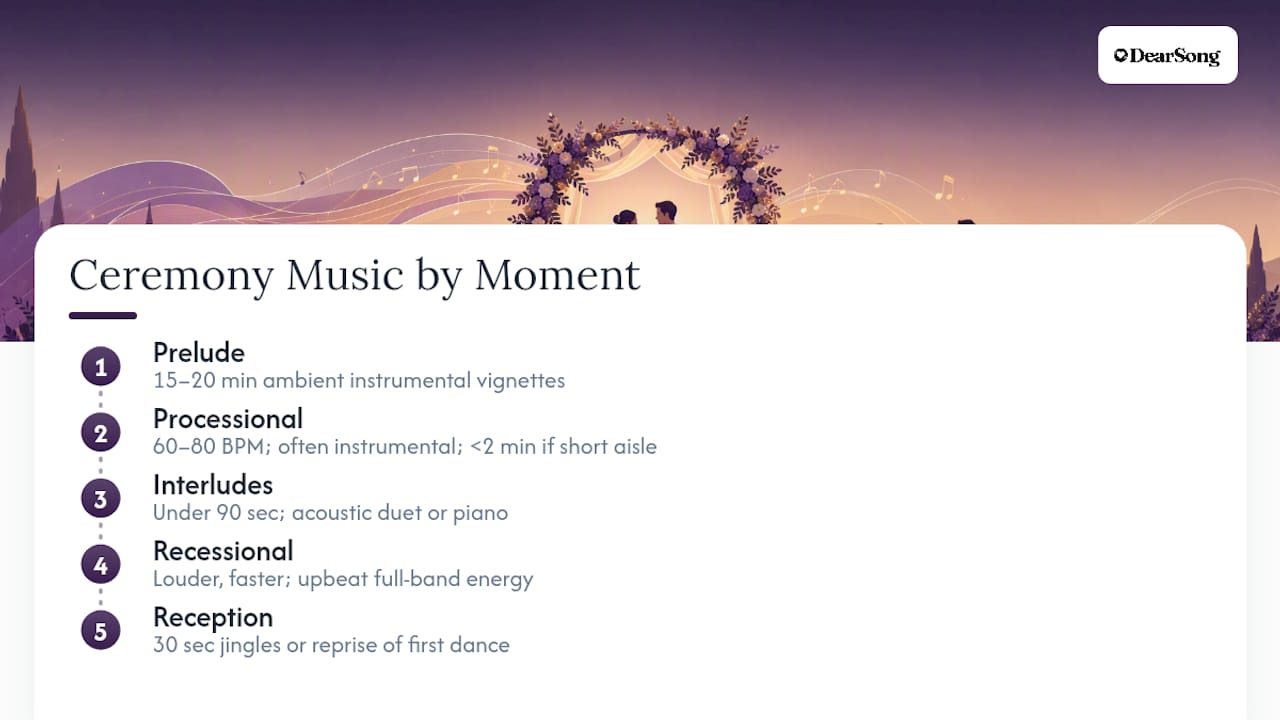
Prelude. This is the 15 to 20 minutes while guests find their seats, so the mood should be ambient rather than attention grabbing. Ask for two or three short instrumental vignettes built around a melodic motif pulled from your relationship, maybe a phrase from "your song" reharmonized as a piano or string arrangement. Keep it in the background register, nothing that competes with conversation.
Processional. Tempo matters more here than anywhere else. Aim for 60 to 80 BPM, which is slow enough for an unhurried walk but not so slow it drags. A purely instrumental version of your custom song often works better than one with lyrics, since guests are watching, not listening for words. If your aisle is short, request a version under two minutes so the music doesn't outlast the walk.
Bride or groom entrance. If you want a lyrical moment here rather than an instrumental one, ask the songwriter to front load the hook, the one line that captures your story, into the first 20 seconds. That's often all the entrance allows before the music needs to resolve or transition.
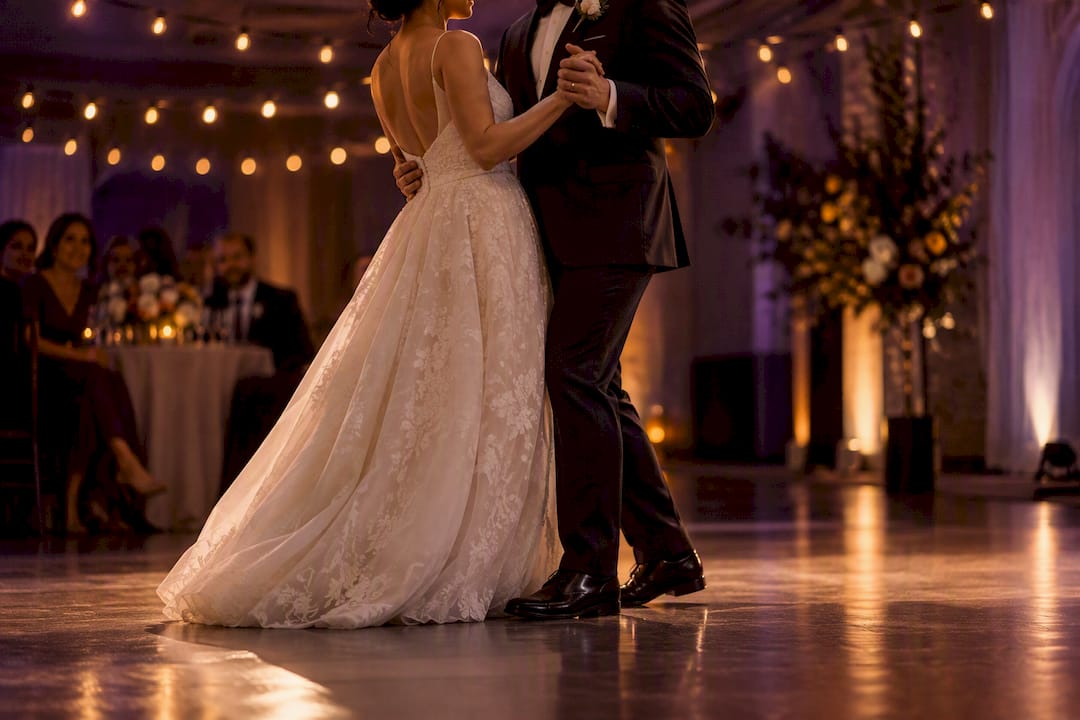
First dance. This is where couples usually spend the most creative energy, and for good reason. A full custom song built entirely around your relationship timeline hits differently than a mash-up of two existing tracks, though a mash-up can work if you each have a song that matters independently. Target three to four minutes, matching the natural length most choreographed dances use, and if you're not dancing to every verse, ask for a fade point built into the arrangement rather than a hard cut.
Interludes and unity ceremonies. A short acoustic duet, guitar and vocal, or a stripped-down piano version of your first dance song works well during a unity candle, sand ceremony, or hand fasting. Keep these under 90 seconds; they're meant to underscore an action, not become the focus of it.
Recessional. This is the one place custom songs should get louder and faster. An upbeat arrangement with a full band feel, closer in energy to Bruno Mars' "Marry You" than "Canon in D," sends everyone out on a high note.
Reception. Custom songs extend naturally into a grand entrance jingle, a 30-second cake cutting theme, or a reprise of your first dance song played as the last song of the night. The reprise is an easy add on that a lot of couples skip and later wish they hadn't.
Pro Tip: Order your first dance song and your recessional at the same time, even from different providers if needed. Couples who leave the recessional for last often run out of time to properly rehearse the tempo.
How to Brief a Songwriter or AI Generator
A vague brief produces a generic song. A specific one produces something that actually sounds like your relationship, and the difference comes down to what you hand over before anyone writes a note.
What every brief needs, at minimum:
- Both names, plus any nicknames you actually use with each other
- Two or three story highlights: how you met, a turning point, an inside joke
- The mood you want (joyful, tender, playful, cinematic)
- A genre reference, even a rough one ("folk-pop, acoustic guitar led")
- Desired tempo or a comparison song for pacing
- Instrumentation preferences (piano, full band, strings, a specific voice type)
- One or two reference songs that capture the feeling you're after
- Target length and where the song will be used
- Any must-include phrases, like a line from your vows or a running joke
A workable briefing template looks like this: names and nicknames (one line), the story in 100 words or less, mood in three words, genre plus one reference artist, tempo as a BPM range or comparison song, instrumentation in a short list, and a hard word count for any must-have lyric.
Here are three ready-to-adapt prompts:
- For a professional songwriter: "We're getting married in June and want an original song for our first dance. We met at [place], and the line 'still the first face I look for' means something to us. We're picturing something in the register of [reference song], mid-tempo, acoustic guitar and light strings, around 3.5 minutes."
- For a commissioning service: "Write us a wedding processional song, instrumental only, 70 BPM, piano led, inspired by the feeling of [reference song]. No lyrics needed, just a melody that builds gently over 90 seconds."
- For an AI generator: "Create an upbeat pop song for a wedding recessional, tempo around 120 BPM, full band with horns, celebratory and joyful, under 2 minutes, mentioning the names Sarah and Mike."
Request one to two revision rounds and specify exactly what to change each time. Naming the specific bar, line, or instrument you want adjusted gets you a better second draft than "make it more romantic."
Timing, Tempo, and Ceremony Logistics to Confirm
Booking windows vary sharply by route. Independent songwriters often need four to eight weeks for a polished commission with revisions. Commissioning services typically turn around a finished track in a few days to two weeks. AI generators can produce something usable in minutes, which makes them the fallback if you're planning close to the date.
Before the song is final, confirm a few logistics:
- Check your venue's amplification limits and live-music rules; some historic or religious venues restrict sound equipment or require pre-approved playlists.
- Coordinate with your officiant on cue timing, especially for the processional and any moment during vows.
- Build a simple cue sheet: who signals the DJ or musician, how long the fade in and fade out run, and a backup plan if a cue is missed.
- Rehearse the actual walk. Wedding professionals consistently recommend walking the aisle to the song before the day, since tempo that sounds fine sitting down often feels rushed or dragging on your feet.
- Request delivery in more than one format: an MP3 for easy sharing, a WAV for anyone mixing sound live, and a private YouTube link as a backup if a laptop or speaker fails.
- Ask directly who owns the finished song and whether the license covers public performance at your venue, especially if you plan to post it later.
Pro Tip: Send the final song file to your DJ or musician at least one week before the wedding, not the night before. That gives them time to test playback on their actual equipment.
Costs and How to Choose the Right Path
Price and creative depth generally move together. AI tools sit at the low end, often free or a few dollars, and can generate a song in minutes with remix options. Dedicated commissioning services land in the low to mid range and typically include a structured brief process and a fast turnaround. Independent songwriters and arrangers charge more but deliver the most bespoke lyrics and production.
Here's how the tradeoffs actually break down:
- AI generators: fastest and cheapest, but fewer revision rounds and less emotional nuance in the lyrics.
- Commissioning services: a middle ground, structured briefs turn your details into a finished song without the long back and forth of a freelance commission.
- Professional songwriters: slowest and priciest, but best for couples who want highly specific lyrics or a live arrangement built for a particular instrument or voice.
Pick AI if you're short on time or budget and mainly want something personal in the background. Pick a service if you want a guided process without managing a freelancer directly. Pick a songwriter if the lyrics themselves need to carry weight, like a vow set to music.
Before booking anyone, ask: how many revisions are included, who owns the rights, what file formats you'll receive, and what happens if you're unhappy with the first draft.
Lyric Snippets and Prompts You Can Use Today
A few starting lines and combinations to steal outright or adapt:
- Processional hook: "Every road led here, to this one aisle, to you."
- First dance hook: "We built this slow, one ordinary day at a time."
- Recessional hook: "Married now, and the whole room knows it."
Three mood and instrumentation pairings worth trying: tender and cinematic with piano and strings at 65 BPM for a processional; warm and nostalgic with acoustic guitar and soft percussion at 90 BPM for a first dance; bright and celebratory with horns and a full band at 122 BPM for a recessional.
For a faith-based ceremony, swap secular references for scripture or blessing language while keeping the same melody and tempo, that preserves the emotional shape without changing the tone.
What DearSong Offers Couples Who Want a Fast, Personal Song
DearSong builds an original wedding song from the details you provide: your names, story, mood, genre, and up to two reference tracks. You choose a package, complete a short brief, and the song arrives as an MP3 with a private YouTube link, ready to play at the ceremony or reception without any extra editing on your end.
It fits best when you're working against a deadline or want something first-dance-ready without managing a freelance songwriter. The Signature package adds two song versions and one free lyric rewrite, useful if you want a second option before locking in your first dance.
Before you order, gather your story details, a mood word or two, a genre reference, and any must-include names or phrases, that's most of what the brief will ask for anyway.
A Practical Take on Custom Wedding Songs
Original songs matter because they turn a moment guests will half remember into one you'll actually keep. The mistake couples make most often isn't picking the wrong song, it's never testing it against the actual walk or dance before the day. Rehearse the timing with whoever is escorting you or running the sound, not just in your head.
— Vlad
Order Your Custom Wedding Song
Dearsong skips the weeks of back and forth a freelance songwriter usually requires. You pick a package, describe your story once, and get a finished song faster than most commissioning services can send a first draft.
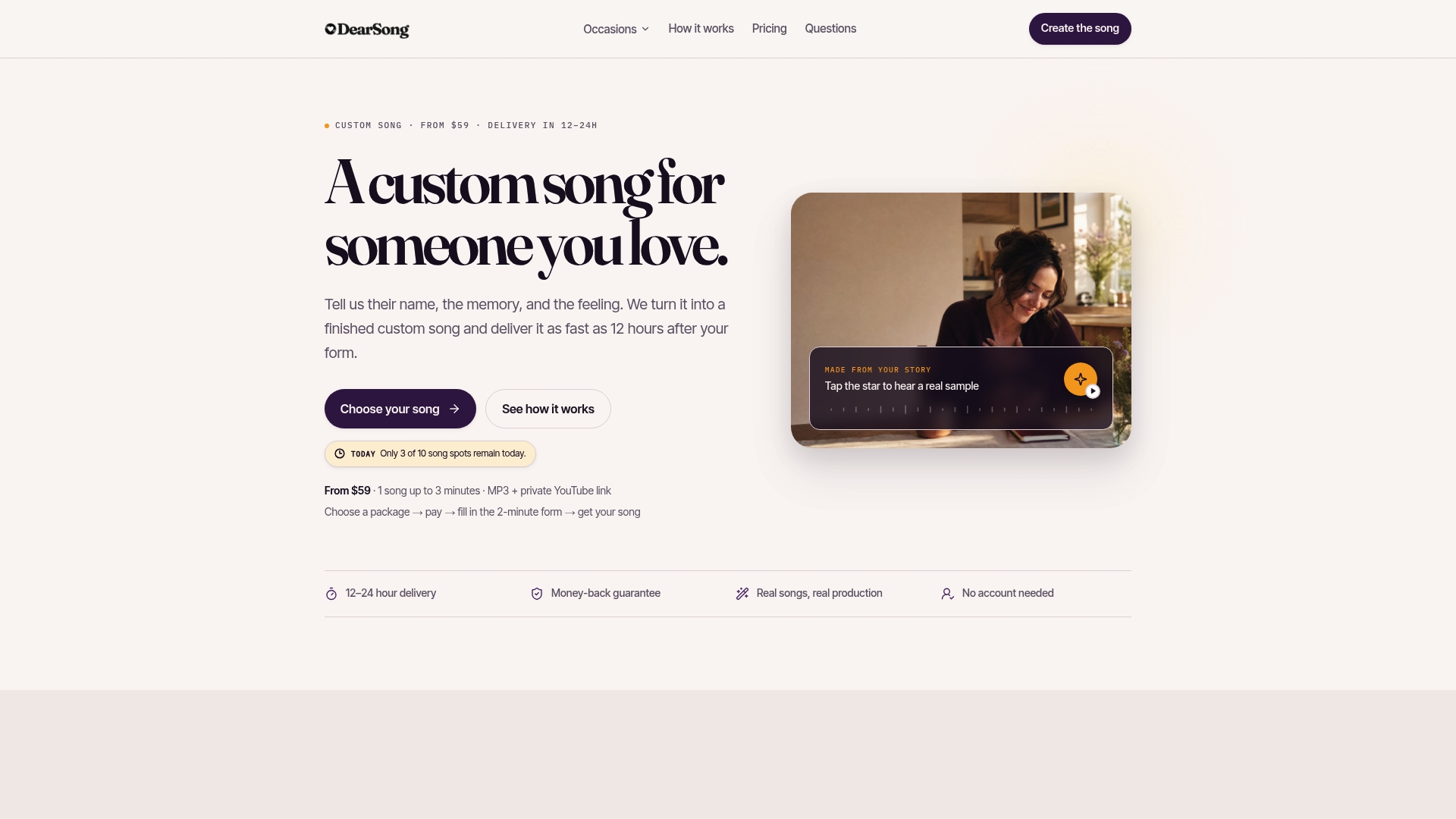
The process runs in three steps: choose Essential or Signature, fill out the short online brief with your names, story, and musical preferences, then receive your MP3 and private YouTube link within 12 to 24 hours depending on the package. Before you start, have your story highlights, mood words, and up to two reference songs ready, that's what speeds the brief along. Head to the custom wedding song page to see sample songs and start your brief today.
Resources for Ceremony Music Planning
A few outside guides worth bookmarking while you plan:
- Joy's ceremony music guide breaks down every ceremony moment with song-count and tempo guidance.
- Neume's AI song guide explains how AI generators handle remixing and lyric edits.
- The Wedding Coach's song list rounds up popular picks by ceremony moment.
- Dustin Callahan Piano offers a look at live piano performance if you're weighing recorded versus in-person music.
Sources
- Wedding Ceremony Music Guide: Songs for Every Moment (2026) - Joy
- How to Create a Custom Wedding Song with AI | Neume
- Best Wedding Songs 2026 — First Dance, Processional, Parent Dances
- 120+ Wedding Songs for Every Moment of Your Wedding (2026)
FAQ
What Are Some Good Ideas for Wedding Songs?
Organize ideas by moment rather than trying to pick one song for everything. A slow instrumental works for the processional, a full lyrical piece fits the first dance, and something upbeat suits the recessional and reception.
What Is the Number One Song Played at Weddings?
There's no single universal answer, but modern lists consistently point to songs like "A Thousand Years" for processionals and "Can't Help Falling in Love" for first dances. A custom song sidesteps the popularity question entirely by making the choice personal rather than trend-driven.
What Are Some Unique Wedding Song Ideas?
The most unique option is a fully original song written around your specific story, names, and inside jokes rather than an existing track. Services like DearSong's custom wedding song build that from a short brief, so the melody and lyrics are yours alone.
What Are the Top Most Requested Wedding Songs?
Recurring favorites include "Canon in D" for the processional, "At Last" and "Can't Help Falling in Love" for first dances, and "Marry You" for the reception, based on commonly cited wedding song lists. These work well as references when briefing a songwriter, even if the final song is completely original.