
Pick a cover story the couple would never question, keep the guest list small, and hand one trusted friend a script for the hour before and after the proposal. That single hour is where surprises live or die. Most successful surprise engagement party ideas boil down to a few common formats: a private-room reveal, a backyard gathering, or a casual brunch. Assign a point person, and the rest is logistics.
TL;DR:
- Surprise parties centered around the couple’s usual habits are less likely to be suspicious and more emotionally impactful.
- Timing is crucial; focus on the hour before and after the proposal, with a detailed script to maintain the element of surprise.
- Keep the cover story simple and based on recent, normal activities the couple has attended, and limit who knows the full logistics.
- Recording the reveal with a professional or guest photographer requires precise cues, ideally using a recorded song or specific signal.
- Costs are mainly driven by guest count and venue, with personalized touches like a custom song offering meaningful impact at a lower price point.
Table of Contents
- Engagement Party Surprise Ideas Worth Actually Using
- Timing the Reveal: A Minute-by-Minute Template
- Making the Cover Story Actually Believable
- Themes, Optional Activities, and Favors That Feel Personal
- Food, Drinks, and What to Tell Guests to Wear
- Capturing the Reveal Without Ruining It
- Your Day-Of Checklist and Point-Person Scripts
- Handling Unexpected Reactions on the Day
- What a Surprise Engagement Party Actually Costs
- Why Small, Specific Surprises Beat Big, Generic Ones
- Add a Personal Song to Your Surprise Reveal
- Sources
- FAQ
Engagement Party Surprise Ideas Worth Actually Using
The best surprise engagement party ideas share one trait: they fit the couple's real habits instead of forcing a theme onto them. A surprise built around something the honoree already loves is nearly impossible to see coming, because there's no reason to suspect anything unusual. Here's a shortlist worth working from, organized by what each format does well.
-
Restaurant private room reveal. Book a back room at a restaurant the couple already frequents. This works best when you want an immediate, dressed-up reveal with minimal setup, and most venues will hold a "reserved for a birthday" sign until the last second.
-
Backyard bonfire or picnic. Cheap, intimate, and easy to stage on short notice. A backyard also solves the hiding problem, since guests can wait inside the house or behind a fence until the cue.
-
Champagne brunch. Daytime reveals are underrated because they work across mixed-age guest lists, from grandparents to college roommates, without anyone needing a babysitter or a late-night excuse.
-
Rooftop or scenic lookout reveal. Delivers the best photos of any format on this list, but it demands precise timing and, in many cities, a permit or reservation locked weeks out.
-
Vineyard or wine-tasting meetup. Feels elevated without much staging. A reserved tasting room doubles as your cover story and your hiding spot in one move.
-
Beach picnic or pool party. Seasonal, but decor is nearly free. String lights, a blanket spread, and a cooler do most of the work.
-
Game night or costume party. A themed party gives you a built-in reason to gather people who wouldn't normally mix, and a costume or murder-mystery premise explains away any weirdness in the room.
-
Sports game or concert section takeover. Highest wow factor on this list, and the hardest to pull off. You'll need venue cooperation and a very patient point person.
-
Family dinner at a neighborhood restaurant. If both families haven't fully met yet, this format doubles as the introduction dinner, which gives everyone a built-in reason to be there.
Guest count changes the math more than people expect. Very small groups can hide in a single living room and need almost no script; larger groups need more coordination and clear signals to avoid early reveals.
Timing the Reveal: A Minute-by-Minute Template
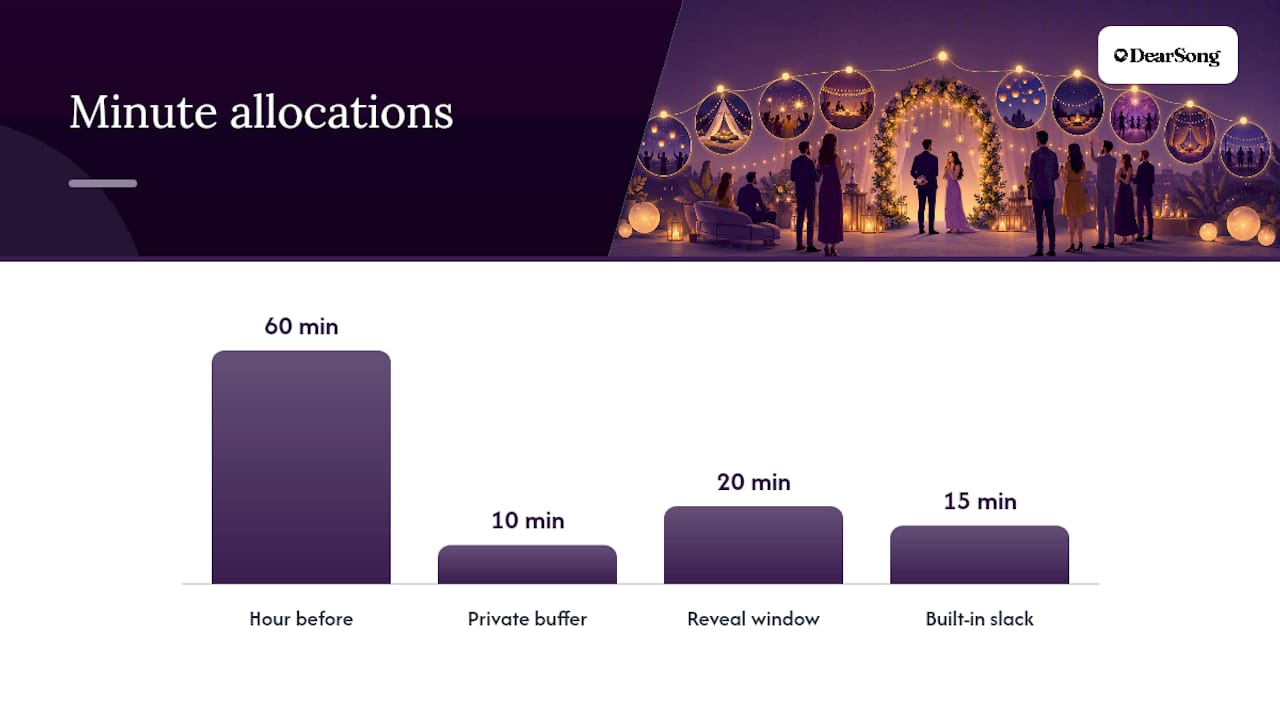
Sequencing, not decor, is what makes a surprise fall apart. Treat the proposal and the party as two separate events connected by a minute-by-minute script that one person owns from start to finish. Planners generally recommend concentrating your effort in the hour before and the hour after the proposal, since that's the window where things actually go wrong.
Here's a template you can copy and adjust to your own timeline:
- T minus 60 minutes: Guests arrive at the venue quietly, phones on silent, no photos posted anywhere.
- T minus 30 minutes: Point person confirms final headcount and checks that the photographer or videographer has a clean sightline.
- T minus 10 minutes: Point person texts the proposer a single word ("clear") confirming the room is ready.
- Proposal happens at the pre-agreed spot, away from the venue.
- T plus 0 to 10 minutes: Give the couple a short private buffer before the reveal. A few slow breaths genuinely help here. Stanford Medicine has noted that simple breathing techniques like cyclic sighing can lower spike anxiety fast, which matters when someone is about to walk into a room full of people.
- T plus 10 to 20 minutes: Proposer sends the "we're coming" text. Point person cues music or lights.
- T plus 20 minutes: Reveal happens.
Build in 15 to 20 minutes of slack somewhere in that sequence, because something will run late. A caterer arrives early, a guest hits traffic, the proposal itself takes longer than planned. Tell your point person about the buffer in advance so they don't panic when the timeline slips.
Pro Tip: Instead of one big "Surprise!" the second the door opens, try a rolling reveal, small clusters of guests stepping out over 20 or 30 seconds. It reads as more genuine on video and gives the honoree a moment to actually process what's happening instead of freezing.
Making the Cover Story Actually Believable
A cover story only works if it matches something the couple has genuinely done before. Event planners generally recommend basing the ruse on an event the couple has actually attended in the last year or two, a friend's birthday dinner, a casual Sunday brunch tradition, a "quick drink before the game." Anything too far outside their normal pattern raises suspicion immediately.
A few cover stories that hold up well:
- "Low-key birthday dinner for [mutual friend]" when the couple already attends similar dinners regularly.
- "Helping [sibling] pack before their move" for a backyard or house-based surprise.
- "Work happy hour, come say hi for twenty minutes" for a bar or restaurant reveal.
Keep the guest list on a strict need-to-know basis. One trusted subgroup, usually the point person plus two or three others, should be the only people who know full logistics; everyone else just needs an arrival time. Digital invites tend to work better than paper or group texts here, since discreet RSVP tools cut down on accidental leaks in a way a public group chat never will. Word the invite vaguely: "Join us for [cover story] on [date]," with no mention of engagement, ring, or proposal anywhere in the text.
On gifts: it's fine to bring one, but keep it modest and don't make a production of gift-opening. This party is about the reveal, not a registry.
Themes, Optional Activities, and Favors That Feel Personal
Skip the elaborate theme if it doesn't fit the couple. The current trend in engagement celebrations leans toward personal, low-pressure gatherings over anything formal, and that's good news if you're short on planning time.
Themes that scale well:
- "How they met" theme — decorate around the actual location or story of the couple's first date.
- Destination-inspired — pull colors and food from a trip that matters to the couple.
- Color-and-flower palette — the simplest option, and nearly impossible to get wrong.
- Their favorite restaurant's vibe, recreated at home — copy the menu, the playlist, the lighting.
Activities should stay optional. A memory wall with printed photos, a couples-trivia round, or a low-key ring-themed scavenger hunt work as icebreakers, but none of them should dominate the evening. Guests want to celebrate, not compete.
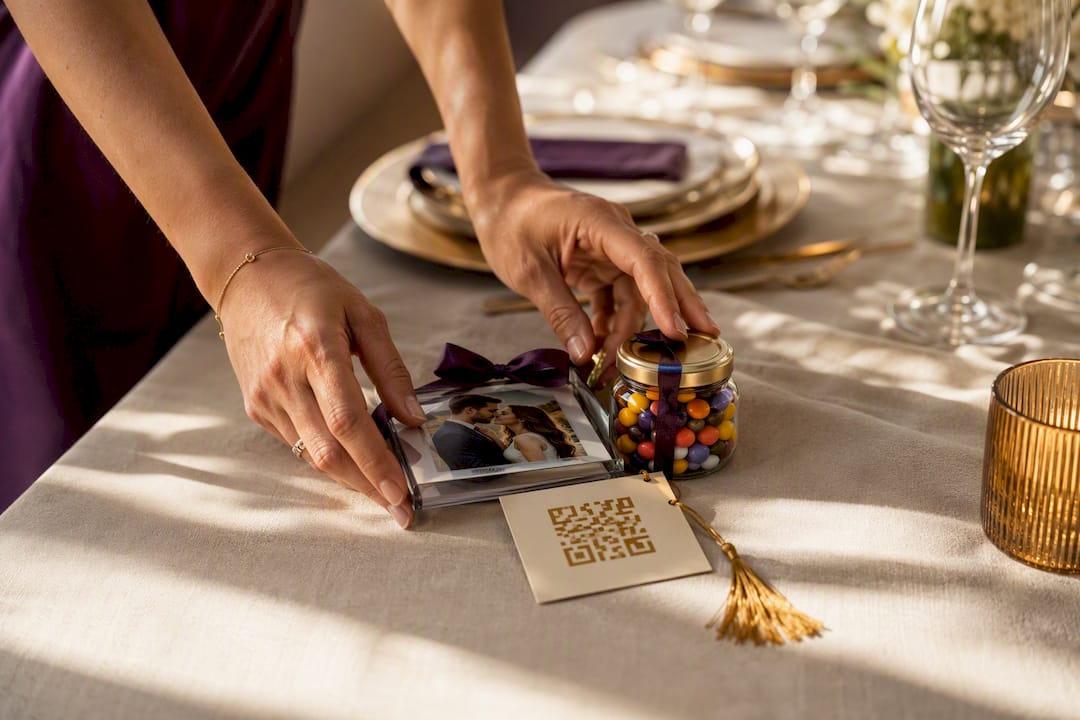
For favors, skip generic party-store items. A small custom keepsake, a printed photo, a jar of the couple's favorite candy, or a card with a QR code linking to a recorded message travels better and gets kept longer than a mug or a candle. Personal touches consistently outperform expensive decor when it comes to what guests actually remember a week later.
Food, Drinks, and What to Tell Guests to Wear
Match the format to how much staging time you actually have. A cocktail reception with passed appetizers needs almost no seating plan and gives guests room to mingle before the reveal. A grazing table or food truck setup requires zero service staff coordination, which matters if your point person is also running the timeline. A seated dinner looks polished but locks guests into one spot right when you need flexibility for a rolling reveal.
A few format notes:
- Brunch with a mimosa or champagne bar doubles as the cover story itself, "just coming for brunch," and needs no explanation.
- Buffet or grazing table lets people eat on their own schedule, which matters when the timeline shifts by 15 minutes.
- Food trucks work well outdoors and remove the need for indoor seating entirely.
Attire should match your cover story exactly, not the actual event. If guests are told it's a casual brunch, don't let anyone show up in cocktail dresses. Brief any vendors in advance: servers and bartenders should hold specific courses or toasts until they see the point person's signal, never on their own schedule.
Capturing the Reveal Without Ruining It
Hidden professional photographers get better technical shots, but a candid-phone approach from two or three guests often catches the raw reaction a posed camera misses. Whichever you choose, give the photographer a physical signal, a raised hand, a specific song cue, so they're locking focus in the ten seconds before the reveal, not scrambling to catch it after.
- Position the photographer where they can see the honoree's face, not the proposer's back.
- Brief videographers on the exact reveal cue in advance, matching the point person's script.
- Consider a signature song or a recorded message as the reveal trigger itself.
A custom song works especially well as that trigger. Services like DearSong turn a couple's story into an original track delivered as an MP3 and private YouTube link within 12 to 24 hours, fast enough to commission even a few days before the party. Play it as the first toast, print the lyrics on a small card, or link it through a QR code on a keepsake favor.
Pro Tip: If you're deciding between live music and a recorded song, recorded wins for surprises. It's silent until you choose to play it, which means zero risk of an accidental early reveal.
Your Day-Of Checklist and Point-Person Scripts
A tight checklist beats a long one, and for practical planning prompts and tools to organize short events and manage your pre-event timeline, consider using resources like Pick one thing tonight. Break it into timing blocks and hand the whole thing to your point person.
- Two weeks out: Confirm venue, send digital invites, lock the cover story with your trusted subgroup.
- 48 hours out: Confirm headcount, brief vendors, test the reveal signal (music, lights, or text).
- 4 hours out: Set up decor, stage the photographer's position, brief arriving early-help guests.
- 1 hour out: Guests arrive quietly, phones silenced, point person confirms the room is clear.
- 10 minutes out: Point person texts the proposer: "clear, come whenever."
- Immediately after: Point person cues the reveal signal the second the couple walks in.
Sample scripts your team can copy directly: "We're set, come on over" (point person to proposer), "Phones on silent, please, quiet arrival" (host to guests), and "They're here!" as the one-line cue for the reveal itself.
If the proposer runs late, stall with drinks and appetizers, nobody notices an extra 20 minutes at a party. If the honoree starts suspecting something, lean harder into the cover story rather than abandoning it.
Handling Unexpected Reactions on the Day
Not every reveal goes exactly as scripted, and that's normal. Some honorees cry, some go quiet, some laugh nervously before they process what's happening. Brief your point person to read the room rather than force the schedule if the couple needs an extra minute before the crowd rushes in.
Prepare for a few realistic scenarios in advance. If the honoree seems overwhelmed, have someone ready to redirect attention gently, dim the lights back down, cue quieter music, or simply give the couple thirty seconds before the group photo. If a guest lets something slip early, your point person should have a backup line ready ("oh, we were just talking about a friend's engagement") to buy a few more minutes.
The bigger risk is often logistical, not emotional: a proposal that runs long, a venue double-booking a room, or a guest who shows up at the wrong address. None of these are catastrophic if your point person has a phone charged and a short list of backup moves, an alternate hiding spot, a flexible arrival window, a second signal method if texts fail.
Above all, resist the urge to force a "perfect" moment. A surprise that goes slightly sideways but still lands with real emotion beats a technically flawless one that feels stiff. The goal is a genuine reaction, not a photo-ready one.
What a Surprise Engagement Party Actually Costs
Costs scale almost entirely with guest count and venue choice, not with how "impressive" the surprise feels. A backyard gathering for 15 to 20 people, using a home as the venue, decor from a party supply store, and a potluck-style food setup, can run under $300 to $500 total. Add a caterer or a reserved restaurant room, and that number climbs quickly into the $1,000 to $2,500 range for 30 to 40 guests, largely driven by food and drink minimums rather than decor.
A few line items worth budgeting for specifically:
- Venue or room reservation fee, if you're not using a home or backyard.
- Food and drink, typically the largest single cost, especially with an open bar.
- Photography or videography, optional but often worth the spend given the point of the party.
- Small personal touches, a custom song, printed favors, a memory wall, which cost far less than decor upgrades but tend to matter more to guests afterward.
The cheapest way to keep costs down without the party feeling bare-bones is to lean on personalization instead of scale. A $300 backyard picnic with a meaningful playlist and a few printed photos often reads as more thoughtful than a $2,000 venue with generic centerpieces. Set your budget around the guest experience you actually want, not the guest count you think you're supposed to hit.
Why Small, Specific Surprises Beat Big, Generic Ones
Working with personalized gifts for years teaches you one thing fast: scale rarely moves people, specificity does. A surprise party with fifty guests and a rented venue can fall flat if nothing in the room reflects the couple's actual story. A backyard gathering with twelve people and one detail that makes the honoree tear up, a photo, a song, a callback to how they met, does more emotional work than any amount of decor.
That's the same principle behind a personalized song instead of a generic playlist. Specificity is what people remember.
— Vlad
Add a Personal Song to Your Surprise Reveal
If you want one detail that guests will actually remember, skip the generic playlist and use a song written around the couple's real story. A custom song service turns a short brief, names, an inside joke, or the place they met, into an original track delivered as an MP3 and private YouTube link, fast enough to commission even a few days before the party.
There are a few natural moments to use it. Play it during the first toast right after the reveal. Print the lyrics or a QR code on a keepsake card for guests to take home. Or send it privately to the couple afterward as a quiet second surprise once the party's over. The Essential package delivers one original song within 24 hours of your completed brief, while the Signature package adds priority 12-hour delivery, two song versions, and a printable gift poster. Start with DearSong and submit your brief as soon as your guest list is locked, that gives the songwriting team the most room to work with your timeline.
Sources
- How to Plan a Jaw-Dropping Surprise Engagement Party
- 17 Engagement Party Ideas for Every Couple
- How to Plan a Proposal That Turns Into a Surprise Party
FAQ
What are some ideas for a surprise engagement?
Strong options include a private restaurant room, a backyard bonfire, a champagne brunch, or a rooftop reveal, chosen based on the couple's real habits so the cover story holds up.
Do you bring anything to a surprise engagement party?
A small gift is appropriate but not required; keep it modest since the focus stays on the couple's reveal rather than gift-opening.
Are surprise engagement parties a thing?
Yes, they're a well-established tradition, and current planning trends favor smaller, more personal versions over large formal events.
What is a good gift for a surprise engagement party?
A personalized keepsake tends to mean more than a generic item; a custom song from a service like DearSong or a printed photo card both travel well and get kept long after the party ends.