
A gender reveal song is a custom, commissioned piece of music built around the details of your family and delivered as a finished recording, not a curated playlist of chart hits. It works because it turns a moment friends have seen a hundred times on social media into something that only exists for your baby, and some services deliver a finished track quickly for a fee around $59 to $89.
TL;DR:
- Personalized songs require detailed briefs with specific family anecdotes, names, and emotional tone to ensure a memorable and meaningful reveal.
- Turnaround times can range from 12 to 24 hours for basic packages, with prices typically starting around $59 and increasing based on complexity and delivery options.
- Providing reference tracks and clear pronunciation notes helps songwriters accurately capture the desired mood and details, leading to a more authentic final product.
- Playing the song at the right moment, instantly before the reveal, with proper sound checks, maximizes emotional impact and avoids technical mishaps during the event.
- Clear communication about rights, files, and revisions before purchase prevents misunderstandings and guarantees you own the track for personal use without extra fees.
Table of Contents
- What Counts as a Gender Reveal Song (and When to Commission One)
- How Do You Actually Order One?
- What Should You Expect on Timing, Price, and Files?
- How Do You Play the Song for Maximum Impact?
- How Do You Get the Most Personal Song Possible?
- Why the Best Reveal Songs Skip the Obvious Choices
- Ready to Turn Your Story Into a Song?
- Sources
- FAQ
What Counts as a Gender Reveal Song (and When to Commission One)
A commissioned gender reveal song is an original recording written to your specifications, not a preset playlist or a licensed pop track played over confetti cannons. The two get confused constantly, but they solve different problems: a playlist sets a mood, while a bespoke song announces something. It carries the parents' names, the due date, maybe a sibling's nickname, and a musical style chosen on purpose rather than by algorithm.
This approach makes sense in a few specific situations:
- A surprise reveal party where the song itself is the big moment, played right before the reveal.
- A social video reveal, where a short, punchy track gives the clip its emotional payoff.
- A keepsake gift, something the parents can replay on the baby's first birthday or ten years later.
- A long-distance announcement to grandparents or family who can't attend in person.
Personalized-song platforms have made this accessible for people with zero musical background. You answer a set of guided questions about your story, and a songwriter turns those details into something genre-appropriate and specific to your family, the same way a personalized poem or engraved gift works, just set to music.
How Do You Actually Order One?
The ordering process is simpler than most people expect, and it doesn't require you to know anything about music theory or production. Here's the general sequence:
- Pick a package. Most services offer a base tier (single song, standard turnaround) and a premium tier (multiple versions, faster delivery, revision included).
- Pay and unlock the brief form. The clock on delivery typically starts once you submit your details, not once you pay.
- Fill out the brief. This is the part that determines whether your song feels generic or genuinely personal.
- Wait for delivery. Depending on the service and package, this ranges from 12 hours to a few days.
- Review and request changes if the package includes a rewrite. Not every tier includes this, so check before you order.
Your brief is the single biggest factor in how the final song turns out, more than genre choice or even production budget. A strong brief includes:
- Both parents' names and correct pronunciations.
- The due date or the planned reveal date.
- One or two specific anecdotes: how you found out, a funny craving, a nursery detail.
- The mood you want (playful, tender, triumphant, funny).
- A genre preference (country, pop ballad, acoustic, hip hop, whatever fits the family).
- Two reference tracks, chosen for emotional tone rather than because they're the recipient's favorite artist.
- Any must-say or must-avoid notes, like inside jokes to include or names to leave out.
On references specifically: songwriters do better work when you send tracks that capture the feeling you want, not just a name-drop of an artist you like. Composers translate emotional tone into arrangement more reliably than they translate a vague genre label. If you can record a 30-second voice memo of yourself saying the baby's name or a key phrase, send it. It helps a writer capture the correct pronunciation and natural phrasing, which matters more than people expect when a name ends up in a lyric.
Pro Tip: Don't try to write the lyrics yourself and hand them over as a finished draft. Give raw material, the story, the names, the feeling, and let the songwriter shape it. Overly scripted briefs tend to produce stiffer songs than loose, detail-rich ones.
What Should You Expect on Timing, Price, and Files?
Fast-turn songs for events are increasingly common, and some platforms now offer 24 to 72 hour delivery windows for shorter, event-focused tracks. If your reveal is this weekend, ask directly whether a rush option exists before you assume you're out of time.
Price depends on a handful of factors, and understanding them helps you avoid sticker shock or a mismatch between what you expect and what you get:
- Length and complexity. A 90-second cut costs less to produce than a full three-minute song with multiple sections.
- Number of versions. Getting two takes to choose between costs more than getting one.
- Revisions. A free lyric rewrite is a meaningful perk; without it, changes often cost extra.
- Usage rights. Personal, private use is standard. Anything involving public performance or commercial use is a different conversation.
Commissioning guides consistently point out that fees and schedules vary by length, instrumentation, and composer reputation, and that scope should be negotiated up front rather than assumed. For a personal gender reveal, expect budgets closer to double digits than to the four figures a wedding composer might charge for a live ensemble piece.
Before you consider the order complete, confirm your deliverables. You want at minimum an MP3 file and ideally a WAV master, a private streaming or YouTube link you can share without making the song public, a lyrics sheet, and clarity on whether you own the recording outright or only have a license for personal use.
How Do You Play the Song for Maximum Impact?
Timing decides whether the song lands or gets lost in the noise of a party. The strongest placements are right before the reveal itself, not as background music earlier in the event. A brief pause, a short setup line from whoever is hosting, then the track starts and the confetti, balloons, or cake cutting happens on cue.
A few coordination details make the difference between a smooth reveal and a fumbled one:
- Test the volume and the file on the actual speaker you'll use, the day before, not five minutes before guests arrive.
- Have the track cued and ready on a phone or laptop with the screen already unlocked.
- If you're working with a live musician for part of the event, loop them in early. A resource like Dustin Callahan's event piano services shows how professional performers typically want advance notice on timing and cues.
- Prepare a lyric card or caption in case guests want to sing along or you're posting the clip later.
For the social version of your reveal, request a short cut, something in the 30 to 90 second range. Short cuts perform better for shareability while a full-length version stays as the keepsake you play at home years later. Set your phone to record reactions before the song even starts. The best footage is usually the two or three seconds before anyone realizes what's happening.
Pro Tip: If cousins, grandparents, or best friends are attending, ask the songwriter to slip their names into a line. Hearing your own name in a song someone made for this exact day tends to get the loudest reaction in the room.

How Do You Get the Most Personal Song Possible?
Specific beats general every time. "We found out on a Tuesday and cried in the parking lot" produces a better lyric than "we're so excited." Small, sensory anecdotes give a songwriter something to work with; vague enthusiasm gives them nothing.
If your package includes a rewrite, give targeted notes rather than a general "make it better." Say exactly what's off: "the second verse feels too formal, we want it playful like the first" or "swap the word 'journey' for something less generic." Vague feedback produces vague revisions.
- Send a short anecdote with sensory detail, not just facts.
- Ask if an early sketch or rough demo is available before full production starts.
- Give feedback line by line if something feels off, not just a general impression.
- Confirm pronunciation on any name that isn't obviously spelled.
Requesting an early sketch, even just a rough vocal-and-piano version, locks emotional direction before full production begins and saves you from paying for a full mix that misses the tone entirely.
Why the Best Reveal Songs Skip the Obvious Choices
Most people planning a reveal default to whatever gender-neutral pop song is trending, then wonder why the moment feels borrowed from someone else's party. The songs that actually get replayed years later, the ones parents pull up on an anniversary or play for the kid at age ten, are almost never the trending track. They're the ones with a real name in the lyric and a real detail from the pregnancy.
The overlooked risk isn't cost or turnaround time. It's handing over a brief so vague that the songwriter has nothing to personalize. A one-line brief like "make it happy and country" produces a technically fine but forgettable song. A brief with the ultrasound appointment date, the way you both cried, and a sibling's reaction gives a writer actual material. The gap between a good gender reveal song and a forgettable one usually comes down to five minutes of extra thought before you hit submit on the brief form, not the size of the budget.
— Vlad
Ready to Turn Your Story Into a Song?
You've read the checklist. Now here's the part that actually matters: Dearsong builds your song from a short brief you fill out right after checkout, and delivers it in 12 to 24 hours depending on the package you choose. No back-and-forth with a freelancer, no waiting a week to hear a first draft.
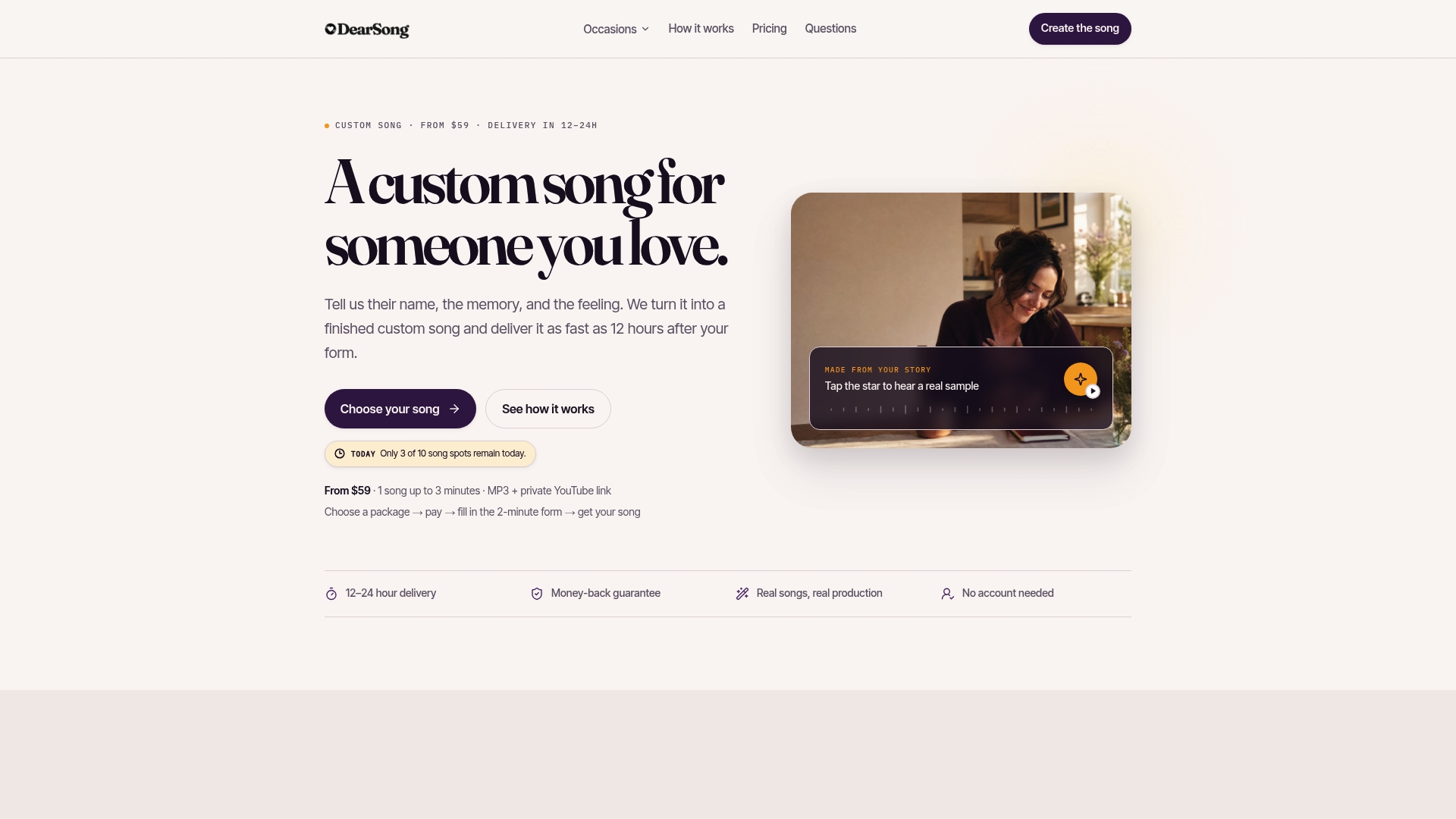
The Essential package runs $59 for one original song up to three minutes, delivered within 24 hours as an MP3 with a private YouTube link. The Signature package is $89 and adds priority 12-hour delivery, two versions to choose between, one free lyric rewrite, and a printable gift poster with a QR code, useful if you want a physical prop for the reveal itself.
Before you start the brief form, gather three to five story points (how you found out, a nickname, a due date), one or two reference tracks for tone, a note on pronunciation for any tricky names, and the exact moment you plan to play the song. If your reveal is this weekend, Essential's 24-hour window gives you room to spare. If you want options to choose from, Signature is built for that. Start your custom gender reveal song now and have it in hand before the party.
Sources
- Commissioning Music: A Basic Guide — New Music USA
- How to commission custom music — kasparnoe
- The Invisible Boost: Why Events With Custom AI Songs Feel Better — Medium
- One Special Song: The personalized gift trend — Glancer Magazine
FAQ
How Long Does It Take to Get a Custom Gender Reveal Song?
Standard delivery is typically 24 hours after you submit your brief form; priority tiers can bring that down to 12 hours.
How Much Does a Gender Reveal Song Cost?
Personal, event-length custom songs generally run in a similar price range, depending on turnaround speed, number of versions, and included revisions.
What Information Do I Need to Provide to Get a Good Song?
Give the songwriter both parents' names, the due date or reveal date, one or two specific anecdotes, a mood and genre preference, and up to two reference tracks chosen for tone rather than artist name.
Can I Get a Short Version for Social Media and a Longer Keepsake Version?
Yes. Ask specifically for a 30 to 90 second cut for sharing online alongside the full-length version you'll keep as a permanent recording.
Do I Own the Rights to a Commissioned Gender Reveal Song?
Personal, private use is standard with most commissioned songs, but you should confirm usage terms before ordering if you plan to use the track publicly or commercially.