
Pick a name-as-hook concept, a story-driven verse structure, or a nickname-and-inside-joke chorus, then paste a short brief into a custom-song order form. That combination gets you the highest emotional return for the least effort. DearSong builds songs from exactly that kind of brief, and University of Bath researchers found personalized gifts create measurably stronger emotional bonds than generic ones. Below: 30+ ready concepts by occasion, a brief template, and lyric snippets you can hand off today.
TL;DR:
- Personal memories, specific details, and verified nicknames significantly increase the emotional impact of a personalized song.
- Names work best as hooks placed on strong beats, with repetition and short titles enhancing memorability.
- Including one or two vivid, concrete memories related to the recipient makes the song feel more genuine and heartfelt.
- The most effective song titles are direct, possessive, scene-setting, or based on inside jokes, depending on the occasion and tone.
- Clear pronunciation, a suitable reference track, and a precise brief are essential for creating a song that resonates and is easy to compile quickly.
Table of Contents
- Name Song Ideas by Occasion and Tone
- How to Write the Commissioning Brief
- Lyric Snippets That Slot a Name Into a Hook
- Which Personal Details Actually Move the Needle
- Song Title Structures Worth Borrowing
- Copyright Considerations When Naming a Song
- Real Song Names Built Around a Person
- Making a Song Name Catchy and Memorable
- Testing a Song Name Before You Commit
- Turning Your Brief Into a Finished Song
- A Songwriter's Take on Name-Driven Songs
- Sources
- FAQ
Name Song Ideas by Occasion and Tone
The fastest way to land on a concept is to match the occasion to a structure that's already proven to work. Here's a working set organized by moment, with the mechanism for how the name actually appears in the song.
Birthday
- "Another Year of [Name]" — chorus repeats the name against a countdown-style verse. Playful, minimal production.
- The Roast Song — verse lists funny quirks, chorus lands on the name like a punchline. Playful, standard production.
- "[Name]'s Anthem" — big, anthemic chorus built entirely around the name as a rallying cry. Standard production.
- Call-and-response birthday chant — a group-sing structure where friends shout the name back. Playful, minimal.
- The Milestone Countdown — verses track ages, bridge lands on the current one. Tender, standard.
Wedding
- First Dance Origin Story — verse one is how they met, chorus is both names together. Tender, premium.
- The Vow Echo — lyrics lift a real phrase from their vows, names bookend each chorus line. Tender, standard.
- Aisle-Walk Instrumental with a Sung Name Tag — mostly instrumental with the name sung once at the climax. Tender, standard.
- The Nicknames Duet — verse uses pet names, chorus resolves to real names. Playful, standard.
Memorial
- "For [Name], Always" — a quiet, repeating refrain that treats the name as a held note rather than a hook. Tender, minimal.
- The Memory Walk — each verse is one memory, the name only appears in the final chorus. Tender, standard.
- Legacy Refrain — built around a phrase the person actually used to say, name woven in gently. Tender, standard.
Baby or Pet
- "Welcome, [Name]" lullaby — soft, repetitive, built for replay at bedtime. Tender, minimal.
- The Naming Story — verse explains why the name was chosen, chorus repeats it warmly. Tender, standard.
- Pet Theme Song — upbeat, silly, name repeated like a chant during walks or play. Playful, minimal.
Friendship
- The Inside Joke Anthem — chorus built entirely around a shared joke, name dropped once for a laugh. Playful, minimal.
- "[Name], You're the One Who…" — verse structure that lists specific shared moments. Tender, standard.
Business or Brand
- The Founder Name Jingle — short, catchy, built for social clips, name or brand woven into a hook line. Playful, standard.
- The Launch Anthem — bigger production, name or product repeated as a tagline. Anthemic, premium.
Pro Tip: The detail that boosts impact most isn't the name itself. It's one specific, verifiable memory attached to it, like the exact street where they met or the nickname only three people use. That's the line that makes someone tear up on the first listen.
You'll notice the strongest concepts across every occasion do the same thing: they treat the name as a hook, not a filler word. A custom birthday song, a custom wedding song, or a custom memorial song all work off this same logic, just tuned to a different emotional register.
How to Write the Commissioning Brief
You don't need musical training to write a brief that gets you a great song. You need specificity. A vague brief produces a vague song, and a vague song is the one thing worse than no song at all.
Use this template, field by field:
- Occasion — birthday, wedding, memorial, etc. One line.
- Recipient name and pronunciation — spell it out phonetically if it's ever mispronounced.
- Three specific memories or details — not general traits ("funny"), but scenes ("fell asleep at his own graduation party").
- Nickname or inside joke — if one exists, name it directly.
- Desired mood and genre — "warm acoustic," not just "nice."
- Two reference tracks — songs that capture the feel you want.
- Length and delivery timing — match to the occasion (a wedding needs lead time; a birthday might not).
- Lines to include or avoid — a real quote to work in, or a topic to skip entirely.
Each field earns its place. The reference tracks matter most because they translate a feeling into something a songwriter can actually hear, and industry commissioning guides consistently point to 3 to 5 concrete memories as the sweet spot, enough to feel personal without overloading the writer.
Here's a sample brief at the right length:
"Birthday song for my mom, Renata (reh-NAH-tah). She raised three kids alone, still dances in the kitchen every Sunday, and calls everyone 'my love.' Warm, folky, like Brandi Carlile. Three minutes, needed by Friday."
Pro Tip: Double-check the spelling and pronunciation before you submit. A misheard name is the fastest way to undercut an otherwise perfect gift.
Lyric Snippets That Slot a Name Into a Hook
A songwriter can build almost anything from a good snippet. These are copyright-safe starting points, not full lyrics, meant to show shape, syllable count, and rhythm.
- Short name (1-2 syllables), chorus hook: "[Name], oh [Name], you're the reason I stay." Four beats per line, works over a mid-tempo pop or folk chord progression.
- Short name, call-and-response: "Say it loud, say [Name]." Punchy, works best with a group vocal or clap track.
- Long name (3+ syllables), verse placement: put the full name at the start of a line so the extra syllables land on the downbeat, not the hook itself: "Isabella walked in like the sun came too."
- Long name, chorus workaround: shorten to a nickname for the sung hook, save the full name for one spoken or half-sung line in the bridge.
- Two names (couples): alternate lines, one name per line, then combine both in the final chorus: "[Name One] and [Name Two], side by side."
- Whispered or spoken name tag: drop the name once, unsung, right before the final chorus. Works well for memorial songs where a big vocal moment feels wrong.
- Acronym or wordplay hook: if the name shares a sound with a common word ("Jaxon" and "action"), the rhyme almost writes itself.
If the first draft's melody doesn't sit right on the name, ask for the free lyric rewrite most premium packages include rather than settling. A name that gets swallowed by the melody defeats the entire purpose of ordering a personalized song.
Which Personal Details Actually Move the Needle
Bath researchers found personalized gifts trigger stronger emotional responses, including measurable increases in oxytocin and dopamine, which is why generic "happy birthday" lyrics fall flat next to a name-anchored one. The detail matters more than the volume of detail.
High-impact details: a specific date, a real place, a nickname only insiders use, a direct quote the person actually said. Low-impact or risky details: broad personality traits ("kind," "funny"), anything unverified, or inside jokes so obscure the recipient won't recognize them without explanation.
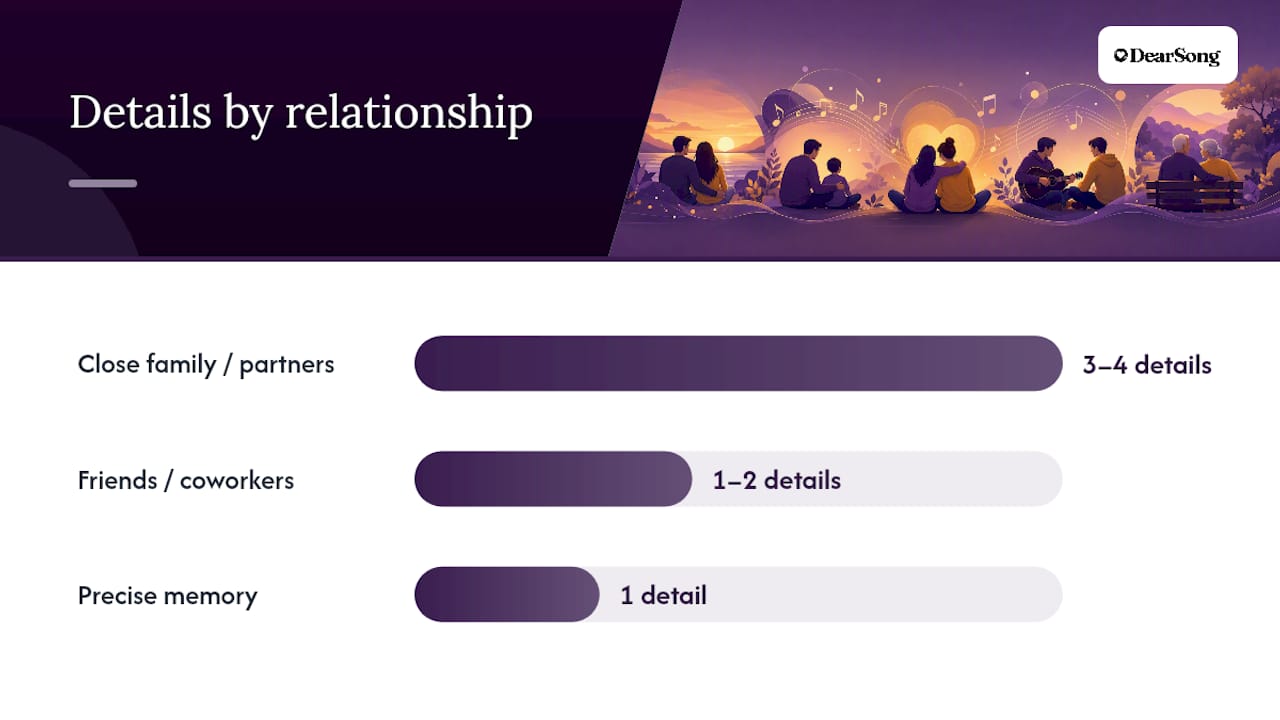
Rule of thumb: close family or partners can support 3 to 4 specific details. Friends and coworkers do better with 1 to 2 sharp ones. One well-chosen memory beats five vague ones, every time.
Song Title Structures Worth Borrowing
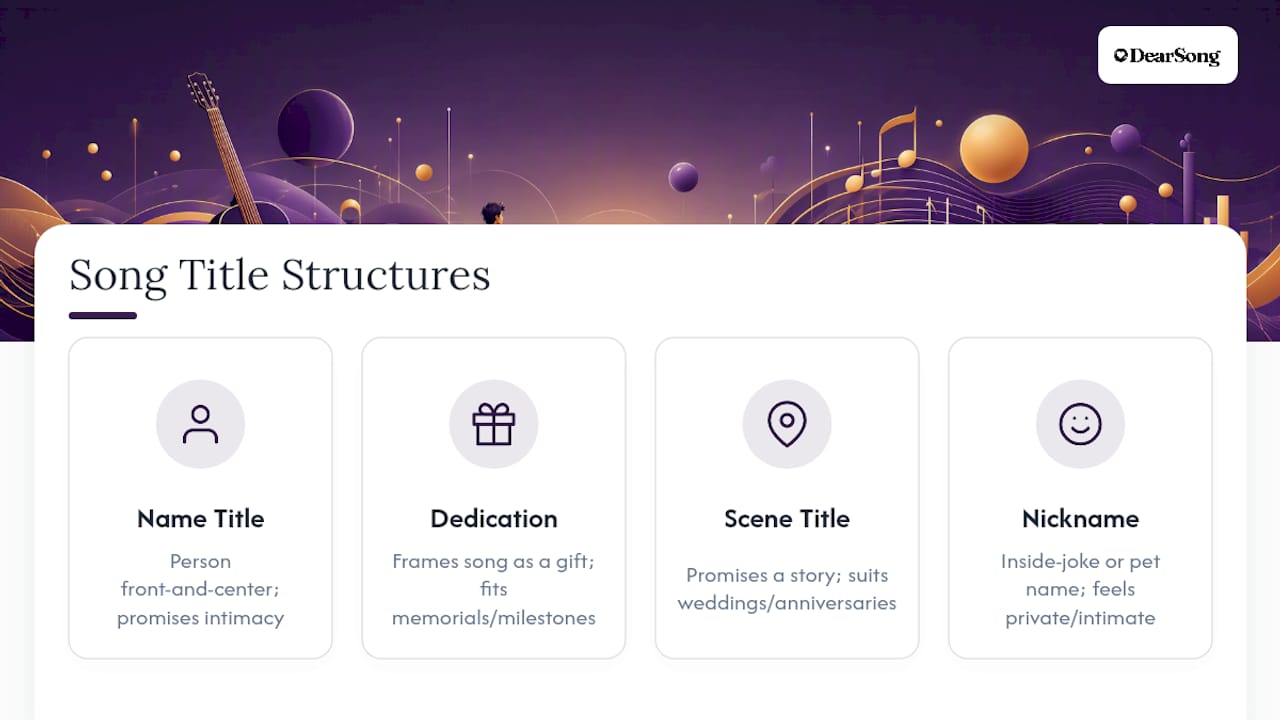
Most memorable song titles fall into a handful of repeatable shapes, and each one carries a different emotional weight.
The direct name title ("Jolene," "Layla," "Billie Jean") puts the person front and center before a single note plays. It works because it promises intimacy immediately, which is exactly why it's the most common structure requested for personalized keepsake songs.
The possessive or dedication title ("For [Name]," "[Name]'s Song") signals the song is a gift, not just a story about someone. This structure fits memorials and milestone birthdays especially well, since it frames the whole piece as an offering.
The scene-setting title ("The Night We Met [Name]") trades directness for narrative, promising a story rather than just a feeling. It suits wedding songs and long-relationship anniversaries, where the "how we got here" arc matters as much as the person.
The nickname or phrase title built from an inside joke or pet name creates instant recognition for the recipient and near-total mystery for everyone else, which is precisely what makes it feel intimate.
There's no wrong structure here. The right one depends on whether you want the song to read as a portrait, a dedication, or a story.
Copyright Considerations When Naming a Song
Song titles themselves generally cannot be copyrighted in the United States. Titles are treated as too short and functional to qualify for copyright protection on their own, which is why you'll find dozens of songs sharing titles like "Angel" or "Home" without any legal conflict.
What can create a problem is copying substantial lyrics, melody, or a distinctive hook from an existing copyrighted song and pairing it with a new name. If you're using a reference track to describe a mood or genre, that's standard commissioning practice. Lifting its actual chorus melody or lyric line is not.
Commercial use adds another layer. If you're commissioning a name song for a business jingle, social ad, or brand film, confirm the songwriter grants a commercial-use license, not just personal listening rights. That's part of what separates a casual gift order from a proper business commission, and it's worth asking about directly before you submit a brief.
Real Song Names Built Around a Person
Some of the most enduring songs in popular music are built entirely around a single name, and studying why they work helps you write a sharper brief.
"Jolene" works because the name is repeated as a plea, not a label. It carries the entire emotional weight of the song in four syllables sung four times in a row. "Layla" works similarly. The name becomes a chant, almost a prayer, rather than a simple identifier.
"Billie Jean" takes a different approach: the name sets up a mystery the rest of the song has to solve. "Amanda" by Boston and "Roxanne" by The Police both use the name as an anchor for longing, repeated at the exact moment the melody needs the most emotional lift.
Notice the pattern: in every case, the name lands on the strongest beat of the chorus, not buried in a verse. That's the single most transferable lesson for anyone writing a name-song brief. Tell your songwriter where you want the emotional peak, and let the name live there.
Making a Song Name Catchy and Memorable
Catchiness usually comes down to rhythm, not cleverness. A name that already has a strong, danceable syllable pattern, like Roxanne or Jolene, gives a songwriter a head start. A name with an awkward cluster of consonants needs more careful handling, often through a nickname or a shortened version used just for the hook.
Repetition is the other lever. Titles that repeat the name two or three times within the chorus stick in memory far faster than titles that mention it once and move on. If the full name is long, ask your songwriter to test both the full version and a nickname in the same melody slot. You'll usually hear immediately which one sings better.
Keep the title itself short. Two to four words tied to the name is almost always more memorable than a full sentence. "For Renata" beats "The Song I Wrote for My Mother Renata" every time, because shorter titles are easier to say, search, and remember.
Testing a Song Name Before You Commit
Before locking in a title or a final lyric line, read it out loud to at least one person who knows the recipient well. If they smile or react before you finish the sentence, the name placement is working. If they need it explained, it's too obscure or too buried in the verse.
A quick, low-cost test: send the working title and a short description of the concept to two or three people close to the recipient and ask which version feels most "them." You're not looking for a majority vote so much as a strong single reaction. One person tearing up says more than three people saying it's "nice."
If you're ordering a package with two versions, like DearSong's Signature tier, use that built-in flexibility. Play both versions for someone who knows the recipient and let their reaction, not your own preference, decide which one gets used for the reveal.
Turning Your Brief Into a Finished Song
Once you've picked a concept and filled out your brief, the process from there is straightforward. You choose a package and pay, then complete a short online song-details form covering the recipient's name, occasion, memories, mood, genre, and up to two reference tracks. The delivery clock starts the moment that form is submitted.
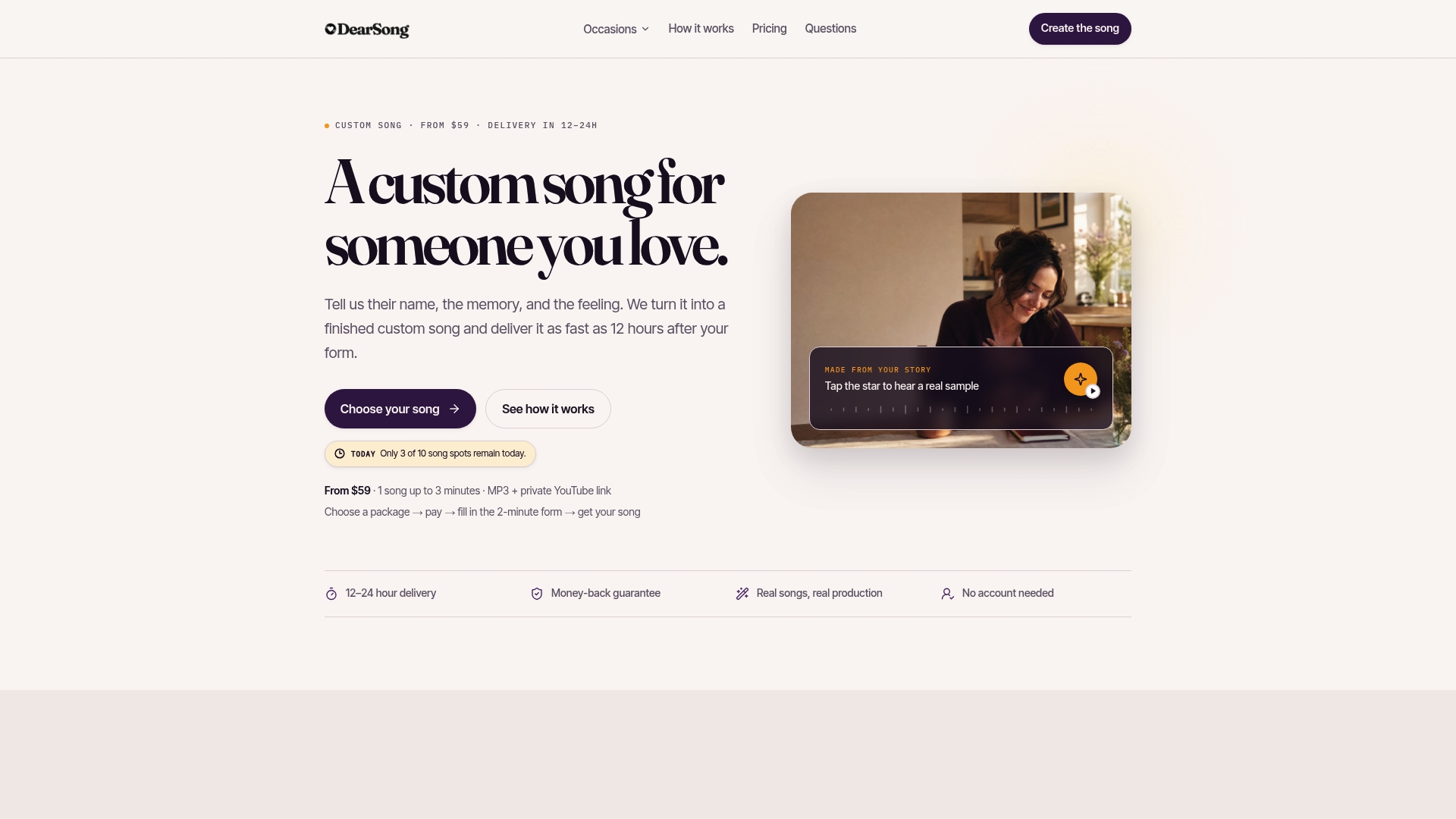
A basic package includes one original song delivered as an MP3 with a private YouTube link, typically within about a day — see the Song List - Dustin Callahan Piano for examples of how personalized music is structured and enjoyed at events. For faster delivery and additional features like two song versions and a free lyric rewrite, a premium tier is available, which also offers a printable gift poster with a QR code linking to the song, helping increase how often a digital gift gets replayed and kept. Choose a package with more options if you want a second version for the melody or lyric placement of the name, or if you're not sure exactly which mood will land best.
Check the full breakdown on the pricing page, then head to the DearSong homepage to start your order. Your brief is already written. The rest takes twelve to twenty-four hours.
A Songwriter's Take on Name-Driven Songs
Names carry more emotional charge than almost any other lyric element, which is exactly why the best personalized songs treat a name as the hook, not an afterthought. The habit worth building: write your brief around one vivid, verifiable memory rather than a list of adjectives, and trust the songwriter to find the melody that makes the name land.
Three things separate a forgettable name song from one that gets replayed for years: singability (does the name actually sit well on a melody, or fight it), pronunciation verification (confirm it in writing before submission), and a clear reference track (one song, not five, that captures the feel you're after).
— Vlad
Sources
- Personalised gifts create lasting emotional connections and enhance self-esteem, new research finds | University of Bath
- How to Commission a Custom Song: The Ultimate 2026 Guide - Custom Song
FAQ
How Long Does a Custom Name Song Take to Make?
DearSong delivers packages quickly once payment and the song-details form are both submitted.
What Details Should I Include in a Song Brief?
Include the recipient's name and pronunciation, three specific memories, a nickname if one exists, your desired mood and genre, and one or two reference tracks; that combination gives a songwriter enough to work with without overwhelming the brief.
Can I Ask for Changes if the First Version Isn't Right?
The Signature package includes two song versions plus one free lyric rewrite, which covers most cases where the name placement or melody needs adjusting.
Is It Legal to Name a Song After a Real Person?
Yes. Song titles are not protected by copyright in the United States, so naming a song after a real person is generally fine as long as you're not copying another artist's lyrics or melody.
What Makes a Name Song Feel Personal Instead of Generic?
One specific, verifiable detail, like a real date, place, or nickname, tied directly to the name in the chorus does more than a long list of general traits, and it's the detail most linked to stronger emotional bonding in personalized gifts.