
Yes, you can turn a poem into a song, and the fastest route takes about ten minutes. Paste the poem into a text-to-song generator, pick a genre and mood that match its feeling, generate two or three variations, then edit the result until the lines actually sing. This guide walks through that process step by step, plus what to do if you'd rather commission a musician to write it for you.
TL;DR:
- AI-generated song drafts typically need detailed editing to fit natural singing, with lines shortened or combined for smooth rhythm.
- Choosing a clear anchor line and marking structural hooks in the poem enhances the likelihood of creating a coherent chorus and verses.
- Slower tempos generally suit reflective or emotional poems, while upbeat tempos work best for celebratory or humorous content.
- Generating multiple versions with AI tools allows comparison of phrasing and melody before finalizing the song.
- For highly emotional or milestone moments, commissioning a human songwriter ensures nuance and genuine connection in the final piece.
Table of Contents
- How Do You Turn a Poem Into a Song, Step by Step?
- Preparing Your Poem: Stanzas, Tags, and Picking a Chorus
- What Settings Should You Use in an AI Song Generator?
- Editing AI Output Into Something Actually Singable
- From Draft to Finished Song: Production, Sharing, and Rights
- AI Draft or Commissioned Song: Which One Fits the Moment?
- Skip the DIY Loop: Get a Finished Song From Dearsong
- Tools and Pages Worth Bookmarking
- Sources
- FAQ
How Do You Turn a Poem Into a Song, Step by Step?
You don't need music theory to get a usable draft in one sitting. The process is mechanical once you know the order of operations.
- Read the poem out loud and pick an anchor line. This is the line with the most emotional weight, the one you'd repeat if you were singing it from memory.
- Mark the structure. Break it into verse-sized chunks and note where a chorus could sit.
- Choose a musical direction. Match genre and mood to the poem's tone: a folk arrangement for something reflective, a cinematic pop build for something triumphant, a stripped-down piano ballad for grief or longing.
- Generate two or three variations. Most poem-to-song generators accept the poem text as-is and let you set genre, mood, and vocal style before producing a track.
- Evaluate singability. Read each draft aloud against the melody. Flag lines that are too long to breathe through or too clunky to land rhythmically.
- Finalize. Combine the best phrasing choices from your variations into one version, then generate a last pass if the edits are heavy.
A love poem written in short, plain lines usually suits a pop or acoustic setting. A longer, image-heavy poem about loss often works better slowed down, with space between lines rather than crammed into a fast tempo. During your first attempt, keep a simple checklist nearby: anchor line chosen, structure marked, genre picked, three variations generated, weakest lines flagged. That's the whole loop.
Preparing Your Poem: Stanzas, Tags, and Picking a Chorus
Poems and songs are built differently, and the gap shows up fastest in structure. A poem's stanza breaks map naturally to verses, but a song also needs a chorus, something a poem rarely has built in.
- Keep your original stanza breaks. They give the generator a rhythm to follow and usually become your verses.
- Insert
Verse]and[Chorus]tags directly above the relevant lines. A [text-to-song workflow reads these tags to decide where sections start and where to repeat. - Choose your anchor line and paste it under the
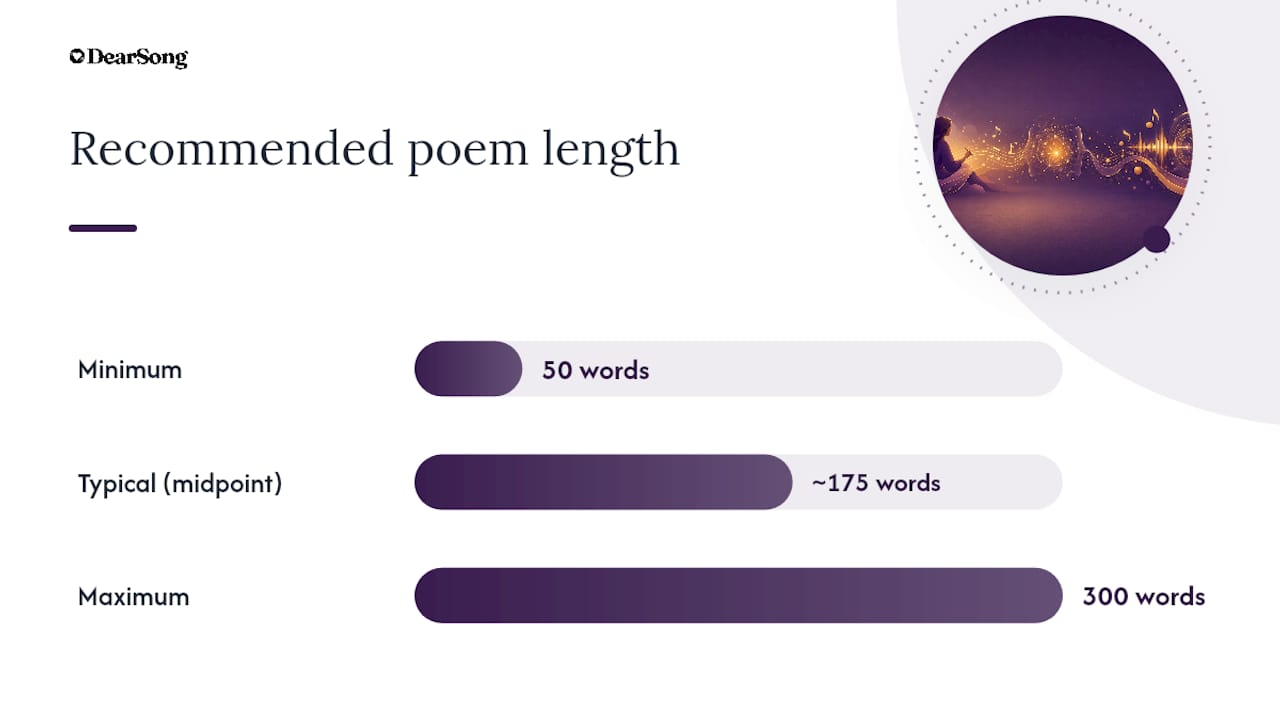
[Chorus]tag, even if it only appears once in the original poem. - Trim long poems down to roughly 50 to 300 words. Cut stanzas that repeat an idea already covered elsewhere.
Short poems can work as a complete song simply by repeating the anchor line two or three times, since a repeated line is what makes a chorus feel like a chorus rather than another verse.
Pro Tip: If your poem has no obvious repeated phrase, pick the single most striking line and manually copy it into a [Chorus] block. AI tools follow structural cues far more reliably than they infer emotional peaks on their own.
What Settings Should You Use in an AI Song Generator?
Most poem-to-song tools ask for the same handful of inputs, and getting these right matters more than which specific tool you use.
- Source type: paste the poem as plain text; most generators handle poem structure without reformatting.
- Genre and mood: pick based on the poem's emotional landing point, not its literal imagery. A poem about rain isn't automatically a sad song.
- Vocal style: male, female, or duet, plus tone (breathy, powerful, conversational).
- Tempo and instrumentation: slower tempos suit reflective or grieving poems; upbeat tempos suit celebration or humor.
Generate more than one version. Many AI poem-to-music tools produce two distinct tracks per request specifically so you can compare phrasing and melody side by side rather than settling for the first attempt. Treat that first batch as a rough draft, not a final answer.
Before you share or monetize anything, check the platform's license terms. Free tiers often restrict commercial use or limit downloads, while paid plans sometimes include royalty-free licensing for the finished track. This matters if the song is headed anywhere beyond a private listen, like a wedding video or a public upload.
Editing AI Output Into Something Actually Singable
The first AI draft almost never comes out perfect, and that's fine. Its job is to show you where the poem resists being sung.
- Read the draft aloud against the melody. Mark any line that runs out of breath before it ends.
- Shorten or combine lines that stumble. Poetic syntax often needs three or four words trimmed to sit naturally on a musical phrase.
- Build the chorus around your anchor line. Paste it wherever the melody naturally wants a repeat, usually at the end of each chorus pass.
- Adjust tempo if the emotional landing point feels off. A quiet ending on a fast beat kills the mood; slow the final chorus if needed.
Common AI poem-to-song tools recommend using that first generation as a diagnostic, a way to spot exactly which lines need repeating or trimming rather than a template to accept as-is.
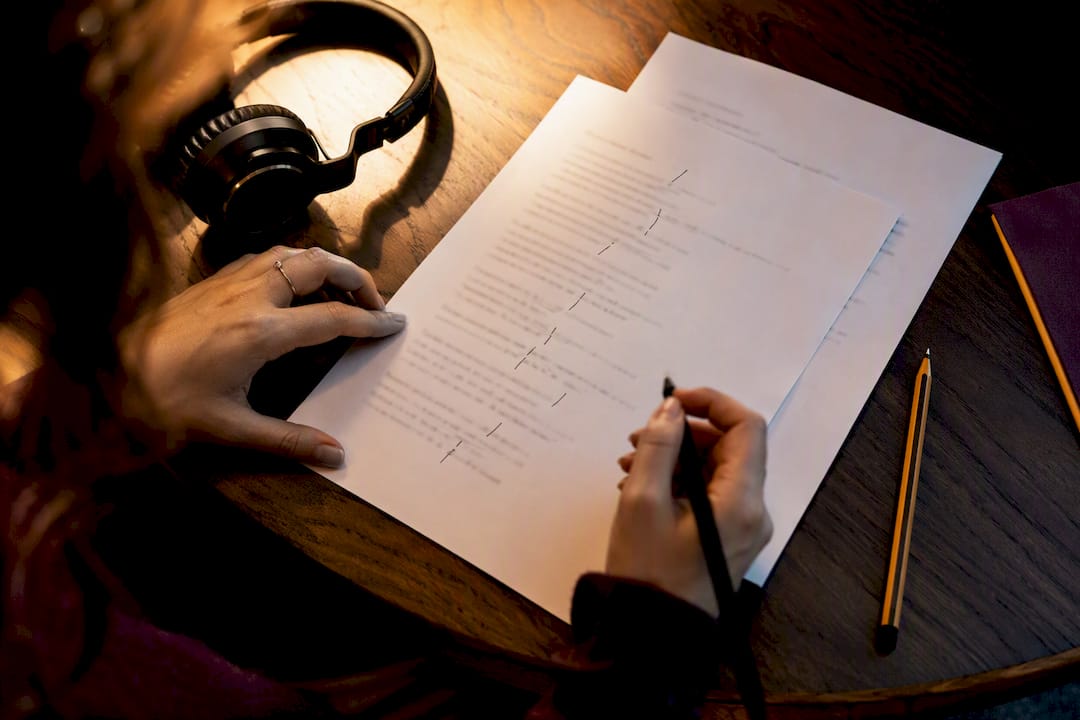
Pro Tip: Mark natural breath points with a slash mid-line before you generate a second pass. It sounds small, but it's often the difference between a line that sings and one that just gets talked over the beat.
From Draft to Finished Song: Production, Sharing, and Rights
Once the lyrics and melody feel solid, you have three realistic paths: export the AI track as-is, record a rough home version over it, or hand the final lyrics to a musician for a proper arrangement.
- Export in MP3 or WAV for sharing, and keep a lyric-only text file in case you want a musician to rework the melody later.
- For home recording, a phone voice memo over the AI backing track is enough to test phrasing before committing to a final version.
- Check the license terms of whatever generator you used before posting the song publicly or using it in a monetized video.
- Credit the original poem if it wasn't written by you, especially if the song will be shared beyond a private gift.
Your next step depends on the goal. A gift for one person needs less polish than a video meant for a wider audience or a demo you're pitching somewhere.
AI Draft or Commissioned Song: Which One Fits the Moment?
Here's where I'll be blunt: an AI draft is a tool, not a finished gift. It's fast, cheap, and genuinely useful for testing whether a poem even works as a song before you invest more time. But speed comes at the cost of nuance. AI settings can approximate a mood; they can't know that a specific nickname or an inside joke is what actually makes a lyric land for the person hearing it.
Budget and urgency matter here too. If you need something in an hour and the stakes are low, DIY AI is the right call. If the occasion is a wedding first dance, a memorial, or a milestone gift where you want the phrasing to feel handwritten rather than generated, that's when a human-written commissioned song earns its cost. Emotional weight and permanence are the deciding factors, not convenience.
— Vlad
Skip the DIY Loop: Get a Finished Song From Dearsong
If you'd rather hand off the editing entirely, a commissioned service can turn your poem, story, or memory into a finished, professionally produced song without you touching a single generator setting. The process starts with a short online brief where you share names, memories, mood, and up to two reference songs, then a songwriter takes it from there.

Choose the Essential package for one original song delivered within 24 hours, or the Signature package for two versions to choose from, a free lyric rewrite, and delivery in as little as 12 hours. It works for a wedding first dance, a birthday, an anniversary, a memorial, or even a tribute to a pet. Head to Dearsong to fill out your brief and get a real, produced song back instead of a draft you still have to fix.
Tools and Pages Worth Bookmarking
A few pages are worth having open while you work through your first poem-to-song attempt:
- Poem to Song, for genre and vocal-style options.
- Free Poem to Song AI, for stanza-preserving generation.
- Song Academy's sample works, for hearing what different poem adaptations actually sound like before you commit to a style.
Sources
- Poem to Song | Turn Poems Into Music with AI
- Free Poem to Song AI | Turn Poems Into Songs Online
- Free Poems to Music Generator - Turn Poetry Into Songs
FAQ
How Do I Turn a Poem Into a Song?
Paste the poem into a text-to-song generator, mark verse and chorus sections, choose a genre and mood that fit the poem's tone, then generate and edit until the lines sing naturally.
What Is a Song Based on a Poem Called?
It's generally called a poetry song adaptation or an art song when set to formal composition; in AI workflows, it's simply referred to as a poem-to-song conversion.
What Are Song Lyrics, Exactly?
Lyrics are the words sung in a song, structured into verses and a repeated chorus, which differs from a poem in that lyrics need repetition and breath points built in for singing.
What Do You Call a Poem Set to Music?
A poem set to music is often called a musical setting or an art song, and when adapted with modern instrumentation and a repeated hook, it functions like any other song lyric.
When Should I Commission a Custom Song Instead of Using AI?
Choose a commissioned song for occasions where emotional precision matters most, like a wedding, memorial, or milestone gift; Dearsong turns a personal brief into a finished, human-crafted song within 12 to 24 hours.