
A commissioned song built from someone's real memories, sung in a style that already feels familiar to them, is the strongest storytelling gift you can give. Music activates autobiographical memory faster and more reliably than a card, a framed photo, or a scrapbook. The next step is simple: write down the recipient's name, several vivid memories with sensory detail, and one reference song or era that already means something to them.
TL;DR:
- Music triggers more emotional and personally relevant memories than photos or keepsakes, especially when songs are familiar to the recipient.
- Including details like the person's era, genre preference, and a reference artist significantly increases the emotional accuracy of the commissioned song.
- Specifying the desired emotional tone upfront is crucial, as memory-evoking music can evoke both warmth and grief depending on the context.
- Short, concrete memories with sensory details make lyrics more meaningful and avoid generic, forgettable sentiments.
- Turnaround times range from 12 to 24 hours, with options to get multiple versions or key revisions, depending on the chosen package.
Table of Contents
- What Makes Storytelling Gift Ideas Built Around Music So Effective?
- Ten Storytelling Song Ideas You Can Commission Today
- How Do You Write a Brief That Makes Lyrics Feel Specific?
- Choosing the Right Package, Timeline, and Presentation
- Why Small Details Beat Big Sentiments in a Song
- Get Your Storytelling Song From Dearsong
- Sources
- FAQ
What Makes Storytelling Gift Ideas Built Around Music So Effective?
Music does something a card can't. A study comparing memory-evoking and merely familiar songs found that music-evoked memories carry more emotional weight than everyday cues, producing stronger positive affect than familiar-but-neutral tracks. Another study went further: when researchers tracked autobiographical memories triggered by music versus food over several weeks, music won on every measure that mattered. It triggered memories more often, produced more involuntary recall, and generated memories people rated as more personally important.
Familiarity is the mechanism, not a nice extra. Research on song recognition found that familiar songs increase memory positivity and temporal specificity, tied to greater activity in the brain's dorsomedial prefrontal cortex. Separate work on song recommendation systems backs this up: genre and familiarity are the two strongest predictors of whether a song feels like a good match for a memory, according to research on constructed music-evoked episodic memories. This is why an "era" or reference song matters more than a generic mood tag when you're commissioning something personal.

One caution worth sitting with: memory-evoking music can pull up sadness along with warmth, particularly for older listeners or memorial gifts, so specify the emotional tone you want before ordering.
The process is built around this same logic. After checkout, customers fill out a short brief covering the recipient's name, memories, nicknames, mood, genre, and up to two reference songs, then receive the finished track within a day or so depending on the service chosen.
- Music beats food, photos, and generic keepsakes as a memory trigger.
- Familiarity (era, genre, reference artist) predicts emotional fit better than mood alone.
- Sad or bittersweet undertones are normal for memory-evoking music. Say so upfront if you want to avoid them.
Ten Storytelling Song Ideas You Can Commission Today
Each concept below works as a short brief. Give the details listed, name a rough sound, and you have enough for a songwriter to work with.
- Birthday tribute for a parent or grandparent. Describe a running family joke, their signature phrase, and one memory from your childhood. Anchor the sound to music from when they were in their teens or twenties, since song familiarity tied to a person's own era boosts emotional accuracy.
- Romantic anniversary song. Include how you met, an inside joke, and a specific place (a diner booth, a rainy parking lot). Reference the artist you danced to on your first date.
- Wedding first-dance or ceremony song. Name the proposal location, a shared nickname, and the song playing when you met, if there is one.
- Memorial or celebration-of-life song. Note whether you want comfort, celebration, or bittersweet nostalgia, since memory-evoking music can trigger both warmth and grief in the same listen.
- Friendship or inside-joke song. List three ridiculous shared memories and let the humor carry the lyrics.
- Newborn or new-family song. Include the due date or birth story, chosen name meaning, and the lullaby style you picture, with ideas for multicultural gifts from Baby in every language.
- Pet tribute song. Describe a favorite habit, a nickname, and the walk or spot they loved most.
- Retirement or graduation milestone song. Cover the years served, a defining project or class, and what's next for them.
- Corporate or brand jingle. Provide the company's founding story, tone (playful versus polished), and where it will run.
- Life-story mashup. Pull one memory from each decade and let the song move chronologically, shifting tempo as it goes.
Pro Tip: If the occasion involves grief or loss, tell the songwriter explicitly whether you want tears or smiles by the final chorus. That one instruction changes the whole arrangement.
How Do You Write a Brief That Makes Lyrics Feel Specific?
Vague sentiment produces vague songs. Concrete detail is what makes a line land, because sensory specifics anchor the lyric to a real moment instead of a generic feeling. A workable brief looks like this:
- Recipient's full name and nickname
- Occasion and date
- Three memories with a sensory detail each (a smell, a sound, a specific room)
- A running joke or phrase only the two of you would recognize
- One or two reference songs, or simply "sounds like the 90s" or "sounds like her favorite artist"
- Mood: joyful, tender, upbeat, bittersweet
- Any names, places, or topics to avoid
Self-selected, personally relevant music consistently produces more specific, vivid, and emotionally important memories than music chosen by someone else. The more of the story you supply, the closer the finished song gets to that effect.
Musical features do real work here too. Tempo and acousticness shape what kind of memory a song evokes: slower, more acoustic songs tend to produce calm, vivid recall, while faster, less acoustic songs lean toward energetic, social memories. If you want quiet reflection, say "slow and acoustic." If you want a room singing along, say "upbeat and full."
Pro Tip: Ask for one lyric rewrite up front if the package includes it. It's easier to adjust one line than to explain a whole new memory after delivery.
Choosing the Right Package, Timeline, and Presentation
Faster delivery usually means fewer creative options, so match the package to how much lead time and flexibility you actually need.
- Order early if the song plays at a live event. Build in a buffer of at least a day past delivery for revisions, especially for weddings or milestone parties.
- MP3 and a private YouTube link cover most sharing needs, from texting the recipient to playing it at a gathering.
- A printable gift poster with a QR code works well for in-person reveals: hand over the poster, they scan it, the song plays.
- Two song versions with one free rewrite suits anyone unsure exactly which mood or verse angle will land, since it gives room to compare.
- Lower budgets still get a full original song, just with a single version and no rewrite cushion, which is fine for lower-stakes occasions like a casual birthday.
Why Small Details Beat Big Sentiments in a Song
The lyric that makes someone cry is never "I love you so much." It's the detail only they would recognize: the diner booth, the mispronounced word from age four, the song playing in the car the night everything changed. Broad sentiment is forgettable. Specificity is what makes a stranger's writing feel like it came from inside the relationship.
When composing, I check four things every time: is this line clear, is it specific to this person, does the sound already feel familiar to them, and does the mood match what they asked for. Skip any one of those and the song feels generic no matter how nice the melody is.
— Vlad
Get Your Storytelling Song From Dearsong
Most storytelling gifts ask the giver to do the creative work themselves: journaling apps, memory books, DIY playlists. Dearsong skips that step and hands you a finished, original song built from the details you already have. DearSong turns a short brief into a song delivered in 12 to 24 hours, no writing skill required and no account to set up.
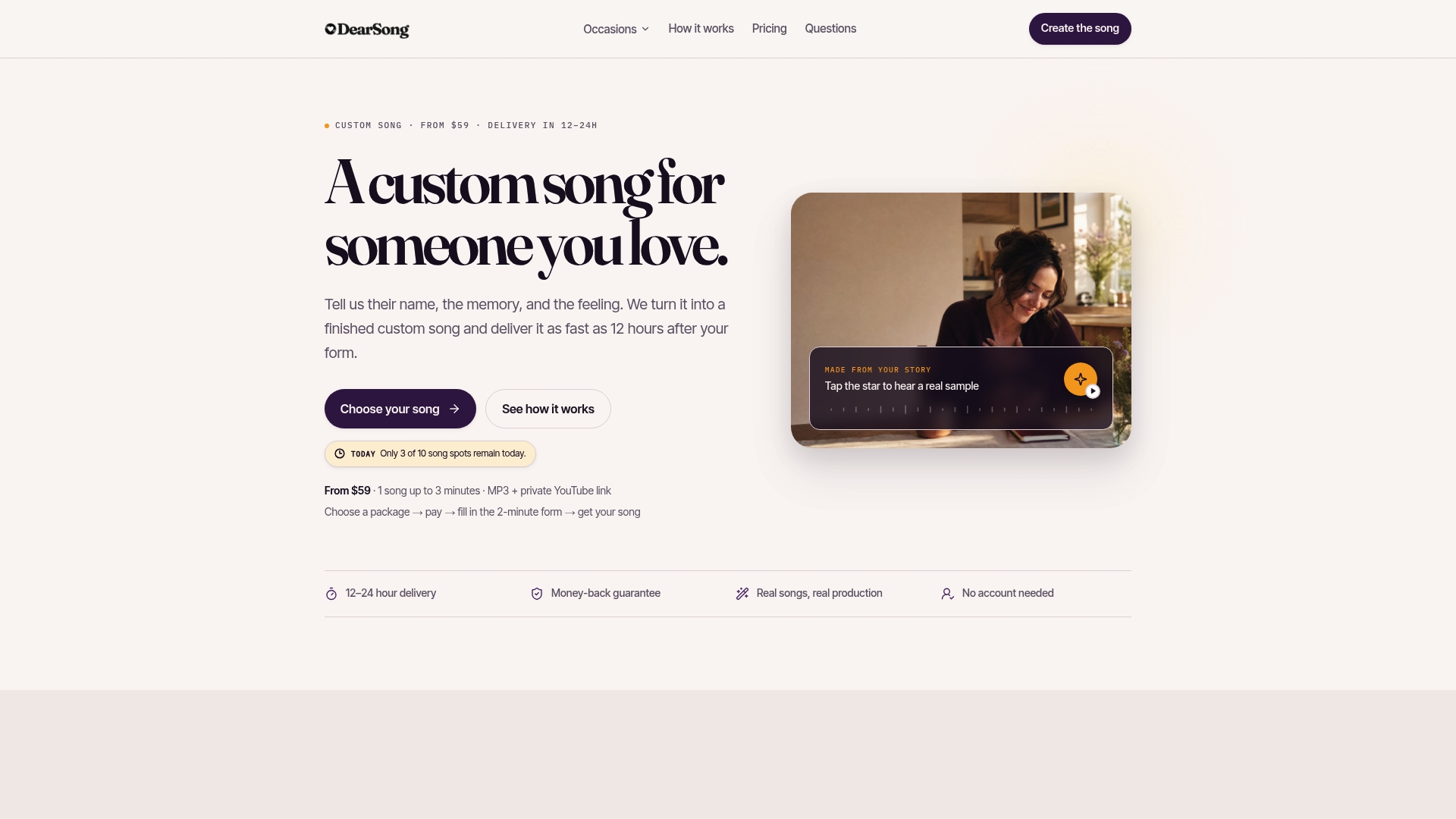
Pick Essential at $35 for one original song up to three minutes, delivered within 24 hours with an MP3 and private YouTube link. Pick Signature at $89 if you want priority delivery in 12 hours, two versions to choose between, one free lyric rewrite, and a printable gift poster with a QR code. Weddings, anniversaries, and love songs each have their own brief page if you want occasion-specific prompts: try the custom wedding song, custom anniversary song, or custom birthday song pages to start. Every order includes a satisfaction guarantee, so submitting your story is the only real risk you take. Fill out the brief now and have a finished song in your inbox before tomorrow.
Sources
- Music-evoked autobiographical memories are associated with negative affect in younger and older adults - PMC
- The effects of song familiarity and age on phenomenological characteristics and neural recruitment during autobiographical memory retrieval - PMC
- Qualities of music-evoked autobiographical memories are associated with auditory features of the memory-evoking music
FAQ
What Is a Storytelling Gift Idea Using Music?
It's a personalized song written around a specific person's memories, names, and inside jokes rather than generic lyrics. Dearsong builds these from a short customer brief covering mood, genre, and reference songs.
How Much Does a Custom Song Cost?
Dearsong's Essential package is $35 for one song delivered in 24 hours, and the Signature package is $89 for two versions, a rewrite, priority 12-hour delivery, and a printable gift poster.
How Long Does It Take to Get a Personalized Song?
Delivery starts once the song-details form is submitted, with turnaround times depending on the package selected. Plan some buffer time before any live event in case you want adjustments.
What Details Should I Include to Make the Song Feel Personal?
Include the recipient's name, three specific memories with sensory detail, a nickname or inside joke, and one reference song or era. Familiarity is one of the strongest predictors of whether a song feels like an emotional match.
Can a Custom Song Work for a Memorial Gift?
Yes, and it's one of the more common uses for memory-evoking music, though it's worth stating whether you want the tone to lean comforting or celebratory. Dearsong's memorial song option lets you specify that mood directly in the brief.